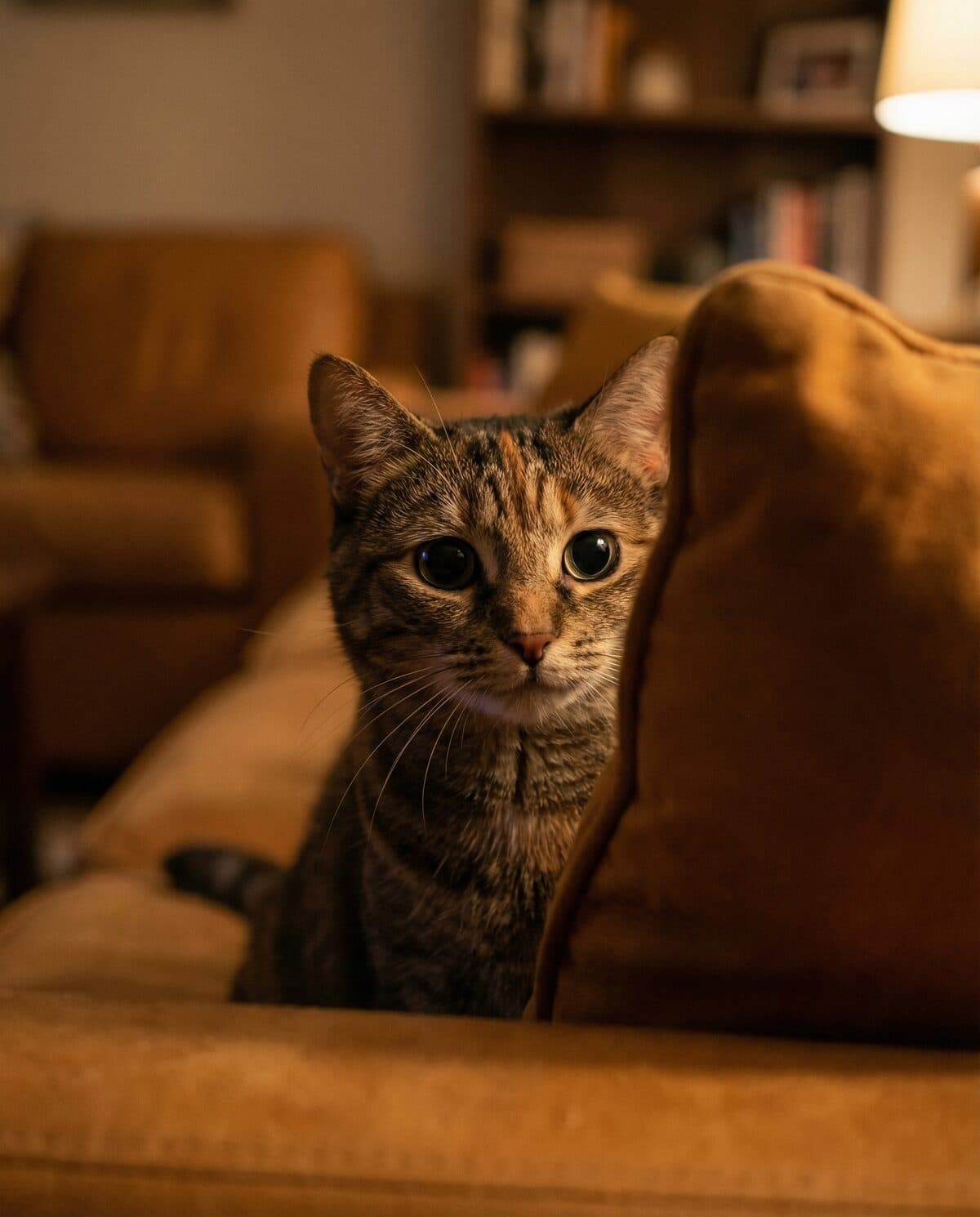
Cat Archetype
The Anxious Homebody
Your cat isn't antisocial — they're overwhelmed
Is This Your Cat? Take the Free QuizUnderstanding The Anxious Homebody
You know this feeling: you come home, call your cat's name, and hear nothing. You check the usual spots — under the bed, behind the washing machine, in the back corner of the wardrobe — and eventually find them pressed into the shadows, wide-eyed and motionless. It wasn't anything dramatic. Maybe a delivery person knocked, or you moved the furniture, or your neighbor started drilling. To anyone watching, it looks like a tiny event. To your cat, it registered as catastrophe. This is the Anxious Homebody pattern, and if you recognize it, you're not imagining things.
The Anxious Homebody is operating from a nervous system that has been calibrated too sensitively. Unlike cats who express anxiety outward through aggression or vocalization, the Homebody turns it inward. They hide, they overgroom, they stop eating in plain sight, they start eliminating outside the litter box when the stress load gets too high. The hiding itself is not the problem — hiding is a healthy coping mechanism for cats. The problem is when there is no longer a safe threshold from which to emerge, when the entire world feels like a potential ambush and the only relief is disappearing. Many owners describe the slow heartbreak of a cat who used to sit with them on the couch, now spending entire days behind the dryer.
What is actually happening neurologically is a chronically activated threat-detection system. The amygdala — the brain's fear-processing center — in an anxious cat fires disproportionately to stimuli that most cats filter out as background noise. This over-firing is not a choice or a personality flaw. It has roots in genetics, early kittenhood socialization windows, and sometimes in specific experiences that created strong associative memories. The good news, backed by decades of feline behavioral research, is that the nervous system is plastic. With systematic, gentle, correctly-paced intervention, the threat-detection threshold can be raised. Your cat's brain can genuinely learn that the world contains more safety than danger. The 12-week Anxious Homebody Protocol is built around exactly this neuroscience, moving from safe-space creation through graduated desensitization to real-world resilience — at a pace your cat sets, with you as the calm, trusted anchor they slowly learn to return to.
Signs Your Cat Is Anxious Homebody
Hides for hours after any change or disturbance
Avoids the litter box when stressed
Overgrooms to the point of bald patches
Freezes or bolts at sudden sounds
Slowly approaches food only when the room is completely quiet
Watches exits obsessively in unfamiliar situations
Common Behaviors You Might Recognize
- 🐱Disappears under the bed when guests arrive and stays there for hours afterward
- 🐱Misses the litter box or eliminates outside of it during periods of change
- 🐱Licks one spot on their belly until it is raw and hairless
- 🐱Startles at the sound of a bag rustling or a door closing across the house
- 🐱Eats only in the middle of the night when the household is completely still
- 🐱Crouches low to the floor and flattens ears when navigating busy rooms
💪 Strengths
- Deeply bonded with one trusted person when that trust is established
- Observant and highly attuned to their environment
- Gentle and non-aggressive — redirects anxiety inward rather than outward
- Responds beautifully to patient, consistent routines
⚠️ Challenges
- New people, sounds, or household changes can trigger days of hiding and stress
- Litter box avoidance creates hygiene and medical complications
- Overgrooming can lead to skin infections and hair loss requiring veterinary treatment
- Anxiety is often invisible until it has reached a critical threshold
The 12-Week Training Plan
Safe space establishment — creating a sanctuary your cat controls completely
Predictable routine installation — same feeding, play, and quiet windows daily
Desensitization to household sounds at minimal volume and distance
Positive association building with new people using food and zero pressure
Litter box optimization — location, type, and number adjustments
Confidence-building play sessions using wand toys at your cat's initiative
Graduated exposure to mild stressors using counterconditioning
Body language literacy — reading early stress signals before hiding occurs
Environmental enrichment to shift anxiety energy into active curiosity
Guest introduction protocol — structured, cat-paced, treat-anchored
Monitoring overgrooming triggers and establishing calm recovery rituals
Long-term resilience: maintaining gains and preventing regression
Not Sure If This Is Your Cat?
Take our free quiz to discover your cat's exact behavioral archetype and get a personalized 12-week plan.
Take the Free Quiz →The 5 Cat Behavioral Archetypes
The Territorial Guardian
Your cat isn't mean — they're fighting for what they believe is theirs

The Overstimulated Hunter
Your cat isn't aggressive — they're speaking the language of the hunt
The Velcro Shadow
Your cat doesn't need space — they need to feel safe when you leave

The Wild at Heart
Your cat isn't broken — they're operating on a different trust timeline